Central Texas Gardening Calendar: Managing Hill Country Heat and Cold
Central Texas gardeners often face a narrow window between a late cold snap and the first serious stretch of heat. A calendar based only on dates can miss both. This guide organizes planting around seasons, forecasts, and garden conditions so you can choose when to sow, transplant, protect crops, and shift to the next growing window.
Why a Central Texas Calendar Needs to Stay Flexible
The Hill Country’s planting calendar is less like a fixed appointment book and more like a series of weather-dependent windows. Temperature fluctuations, hot summers, and freezes can make vegetable gardening in Austin and Central Texas challenging, according to the Texas A&M AgriLife Extension Service. Successful vegetable gardening in Austin depends on when to plant and which variety can handle the weather, according to the Texas A&M AgriLife Extension Service.
Those conditions affect more than whether a seed sprouts. A cool-season crop may germinate in warm soil but struggle once hot weather arrives. A warm-season transplant may grow slowly in cold soil, then face a sudden freeze before it has established. Even when a regional planting calendar gives a useful starting point, a sheltered yard, exposed slope, or shaded bed may behave differently from a nearby weather station.
A practical calendar combines several signals:
- The crop’s temperature preference. Cool-season vegetables tolerate cooler conditions better than heat, while warm-season vegetables need warmth to grow well.
- The current weather pattern. A run of mild afternoons does not guarantee that cold nights are over. A warm spell in summer does not mean heat stress has passed.
- Soil condition. Soil that is waterlogged, very cold, crusted, or too dry can make planting harder, even when the air feels suitable.
- The time remaining in the season. A crop needs enough favorable weather to establish and produce. Check the seed packet or nursery tag for days to maturity and use it as a planning aid, not a promise.
- Your yard’s microclimate. Buildings, trees, slopes, fences, and paving can change exposure to sun, wind, and cold.
Use calendar dates as prompts to begin checking conditions, not as a guarantee that the garden is ready. For a broader regional overview, compare this approach with Texas Spring and Fall Planting Windows by Region and Managing Planting Schedules Around Summer Heat and Sudden Freezes.
The Seasonal Overview at a Glance
The table below is a planning framework, not a set of exact planting dates. A crop’s response depends on the weather, the site, and whether you are sowing seed or setting out a transplant. Check local conditions before acting.
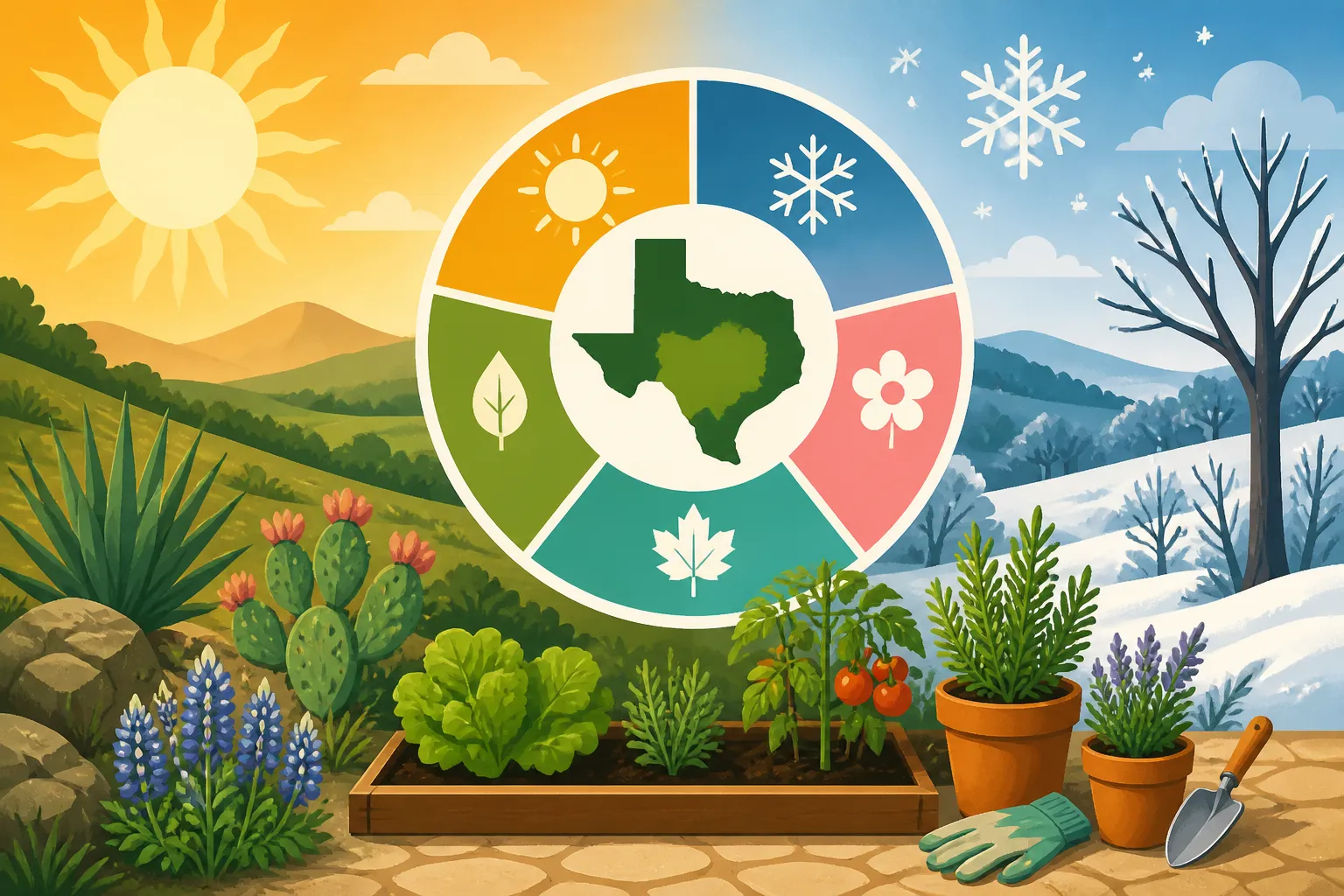
| Garden period | Main opportunity | What to watch | Useful approach |
|---|---|---|---|
| Late winter into spring | Establish cool-season crops, then shift toward warm-season planting as conditions settle | Cold nights, wet or cold soil, and sudden changes in the forecast | Start with crops suited to cool conditions; delay tender transplants until soil and forecast are more favorable |
| Spring warming | Plant warm-season crops while there is still time for establishment before intense heat | Rapidly warming beds, drying soil, and heat arriving earlier than expected | Prioritize crops with enough time to grow; mulch and water consistently as temperatures rise |
| Summer heat | Maintain established crops and prepare for the next cool-season window | Heat stress, drying containers, poor flower or fruit set, and hot soil | Reduce stress, use shade where appropriate, and start fall crops when conditions allow |
| Late summer into fall | Establish cool-season crops before cold weather limits growth | Hot afternoons, warm soil, and the time needed for crops to mature | Start transplants or sow seed according to crop needs and maturity information |
| Fall into winter | Harvest cool-season crops and protect plants during cold snaps | Forecast lows, wind, and differences between sheltered and exposed beds | Harvest as needed, cover vulnerable plants when appropriate, and avoid assuming every freeze affects every site equally |
Central Texas gardens may have more than one productive planting period, but each crop has its own timing needs. A crop that performs well during the cool part of the year may not tolerate a hot midsummer bed. A warm-season vegetable can struggle if planted too early into cold soil or too late to establish before harsh heat.
Make a short plan for each bed rather than trying to follow one statewide schedule. Note what is currently growing, when the bed is likely to open, and what you want to plant next. Then compare the crop’s needs with the forecast and the condition of the soil. If a planned planting window is delayed, select a crop suited to the conditions that remain instead of forcing the original plan.
Late Winter and Spring: Plant Through Uncertainty
The transition from winter to spring can tempt gardeners to plant everything as soon as afternoons feel pleasant. In the Hill Country, that can be a gamble. Warm daytime weather may be followed by a cold night, and air temperature alone does not tell you whether the soil is ready.
Begin with crops that suit cool conditions
As the garden comes out of winter, consider cool-season crops first. Leafy greens, roots, peas, and brassicas are common categories to consider, but their suitability depends on the timing and conditions in your yard. Read seed packets and transplant tags for guidance on temperature preferences and expected maturity.
Direct sowing and transplanting serve different purposes. Direct sowing avoids transplant shock and can suit crops that establish readily from seed. Transplants can give slower-growing crops a head start, but they need to be healthy and acclimated to outdoor conditions. If you are deciding which method suits a particular vegetable, Seeds or Transplants? Selecting Crops for Texas Gardeners can help clarify the trade-offs.
Avoid treating a warm afternoon as proof that a bed is ready. Cold, soggy soil can delay germination and slow roots. If the bed is too wet to work without clumping, wait for it to drain. If the surface dries while deeper soil remains wet, check below the surface before watering or sowing.
Move toward warm-season crops in stages
Warm-season crops need warmth, but that does not mean they should all go into the ground at the first sign of spring. Tender crops can be damaged by cold, and a transplant that sits in cool soil may stall. The date on a calendar is only one part of the decision.
Before planting a warm-season crop, consider:
- Whether the forecast suggests a continuing cold risk.
- Whether the soil has warmed and drained enough for active root growth.
- Whether the transplant has been gradually exposed to outdoor conditions.
- Whether the bed receives enough sun for that crop.
- Whether you can water the planting area as the plant establishes.
Some gardeners start with a small planting and add more later, rather than putting every transplant out at once. Staggering planting can spread risk and harvest, but it also means keeping track of separate sowing or transplant dates. Keep notes about what went into each bed and how it responded; those observations are more useful than trying to remember a season after it has passed.
For a crop-by-crop framework, see Texas Vegetable Planting Guide: Matching Crops to Your Region. For weather-station information and how to interpret it, Using Regional Weather Station Normals to Time Spring Planting offers another useful perspective. A regional average can inform your plan, but it does not predict the weather in your own yard.
Keep frost protection practical
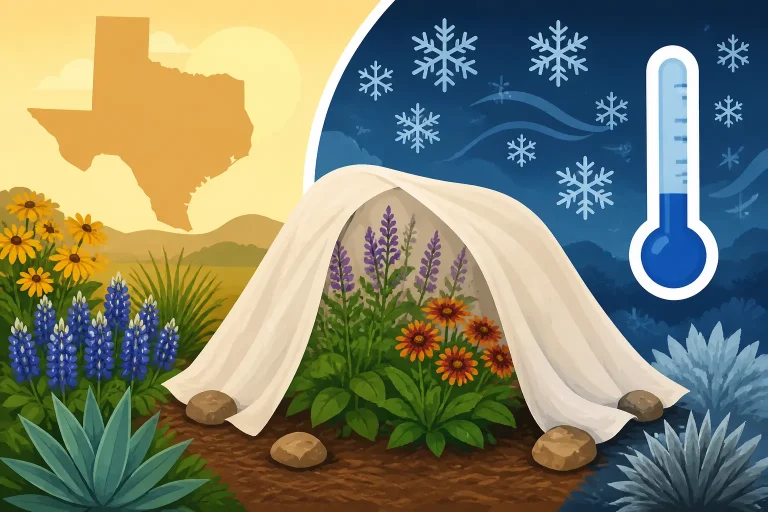
When a cold forecast threatens tender plants, decide whether protection is worthwhile before the evening arrives. Covers can reduce exposure, but they need to be set up securely and used appropriately. A loose cover that blows off or rests heavily on delicate foliage may provide less protection than intended. Remove or ventilate covers when conditions permit, particularly if a sunny day warms the covered space.
Not every plant needs the same level of protection. Established cool-season crops may tolerate conditions that damage tender seedlings or warm-season transplants. Young plants, potted plants, and crops in exposed locations may be more vulnerable than plants in sheltered beds. If you need a step-by-step look at protective options, see Frost and Freeze Protection Strategies for Texas Landscapes.
Spring Warming into Summer: Plant Before the Heat Takes Over
Spring can be a productive but fast-moving period. As days warm, a bed that suited cool-season crops may soon be too hot for them, while warm-season crops need time to root and begin growing. The goal is not simply to plant early; it is to give each crop a suitable start without exposing it to avoidable cold or heat stress.
Plan the handoff between crop groups
As cool-season crops finish, decide what should replace them before the bed is empty. A clean transition helps make good use of space, but avoid rushing a new crop into a bed that is still occupied or unprepared. Remove spent plants, clear weeds, and check moisture and drainage. If you are rotating crops, avoid following one crop with a closely related crop in the same spot whenever practical.
For warm-season planting, choose a crop that fits the remaining favorable period and your ability to care for it. Seed packets and transplant tags provide maturity information, but real harvest timing varies with growing conditions. Heat, limited water, poor establishment, and pest pressure can all slow progress.
Think in terms of a sequence rather than one all-at-once planting:
- Start with crops that can establish under the current conditions.
- Leave room for later sowings if you want a staggered harvest.
- Keep a record of what germinated and what stalled.
- Reassess the plan if heat arrives sooner than expected.
The right crop is not necessarily the one with the longest harvest potential. It is the one that fits the space, season, and care the gardener can provide.
Prepare beds for rising temperatures
As soil warms and plants grow, beds can dry faster. Add mulch where appropriate to moderate soil moisture and temperature, keeping it clear of stems. Check moisture at root depth rather than judging by the surface alone. A dry-looking surface does not always mean the root zone is dry, and a recently watered surface does not guarantee that deeper roots received enough moisture.
Watering needs vary with soil, wind, sun, crop size, and container type. A bed in full sun with sandy soil can dry differently from a sheltered bed with heavier soil. Avoid relying on a universal schedule. Inspect the soil and plants, then adjust your watering approach to what you observe. For additional guidance on responding to hot conditions, see Watering Texas Gardens in Extreme Heat: Is Twice a Day Necessary?.
Container plants need particular attention because their root space is limited and exposed to surrounding heat. A pot on a hot paved surface may dry faster than a bed in the ground. Grouping pots, moving them out of harsh afternoon exposure when feasible, and checking their moisture frequently can help reduce stress. Do not assume a container’s surface tells the whole story; check the root zone.
Recognize when a spring crop is nearing its limit
Cool-season vegetables may bolt, become bitter, or stop producing well as temperatures rise, depending on the crop and conditions. Rather than waiting for a struggling plant to recover indefinitely, harvest what is ready and make space for the next planting. Some crops can remain productive with suitable care, but prolonged heat can shorten their useful period.
If a crop is still producing, decide whether keeping it is worth the space and water it uses. If it is declining, remove it, clear debris, and prepare for the next crop. A transition does not have to happen on one particular date; it depends on how the plants are performing and what you want to grow next.
Summer Heat: Maintain What Is Growing and Plan Ahead
Summer is often the most demanding period for Central Texas vegetable gardens. Heat can stress plants, dry the root zone, and disrupt flowering or fruit development. A calendar should not encourage a gardener to keep planting as if spring conditions were still present. Instead, summer planning has two goals: reduce stress on existing plants and prepare for a fall garden without starting crops into conditions they cannot handle.
Prioritize the plants that can still produce
Inspect the garden regularly for signs of stress. Wilting in the afternoon may be temporary, while persistent wilting, dry soil, leaf damage, or poor growth can signal a more serious problem. Check the root zone before watering, since adding water to already saturated soil can create other problems.
Use mulch to limit rapid soil drying, keep weeds from competing for water, and avoid unnecessary disturbance around plant roots. If plants are crowded, improve airflow where practical. Remove diseased or heavily damaged material rather than leaving it to accumulate in the bed. For pest or disease symptoms, identify the cause before treating; similar-looking symptoms can have different explanations.
Shade can help some plants and containers during the hottest part of the day, but it is not a universal fix. A crop that needs strong light may produce less if shaded too heavily. Use shade strategically and observe how plants respond. Container gardeners can also shift pots to a less exposed location, provided the new spot still offers enough light for the crop. See Using Afternoon Shade and Shade Cloth for Texas Containers for ideas specific to container growing.
Prepare fall crops before the weather feels comfortable
Fall planting requires planning in reverse. Many cool-season crops need time to germinate, establish, and mature, but late-summer soil and air can still be hot. Waiting until the weather feels cool may leave too little time for a crop to develop before cold weather returns.
Check the crop’s maturity information and count backward from the period when you expect conditions to become less favorable. Because no calendar can guarantee the arrival of cool weather, build flexibility into the plan. You might start transplants in a protected place or sow crops as conditions allow, then move them into their final spot when they are ready and the weather is suitable.
Starting fall transplants during hot weather can be difficult. Young plants may need protection from intense afternoon sun and careful attention to moisture. Do not let seed trays or small pots dry out, but also avoid keeping them waterlogged. Transplants that are hardened off gradually are generally better prepared for outdoor conditions than plants moved straight from a sheltered setting into full exposure. Starting Fall Garden Transplants During Midsummer Heat focuses on this challenge.
For direct-sown crops, keep the seedbed evenly moist during germination. A hot, dry surface can prevent reliable establishment even when the deeper bed has moisture. Use a light cover or other appropriate method to reduce drying if needed, then adjust it as seedlings emerge. Planting Fall Vegetables to Root During Late-Summer Texas Heat discusses how to think through that difficult transition.
Avoid planting by habit
A common calendar mistake is repeating last year’s dates without considering what happened that season. If a fall crop struggled to germinate during hot weather, record that. If a spring planting was damaged by a cold snap, note whether it was in a low spot or near a wall. Those details help improve next season’s decisions.
A short garden log can include:
- What was planted and whether it was seed or transplant.
- The general weather conditions at planting.
- Which bed or container was used.
- How quickly the crop established.
- When it began producing or showed stress.
- What protection or watering changes were made.
The purpose is not to create a perfect record. It is to spot patterns specific to your property. A calendar from another part of Central Texas can offer helpful context, but your own observations make it more useful.
Fall and Winter: Use Cool Weather Without Trusting It Too Much
Fall can bring a welcome return to gardening, but it is not a guaranteed stretch of mild weather. Hot afternoons may linger, and cold snaps can arrive before a crop is ready. The planting window depends on the crop, the site, and how much time remains for growth.
Establish crops while there is time to mature
Choose fall crops based on their growth needs and the time available. Check the expected maturity period on seed packets or transplant tags. Add some flexibility because the stated period is not a promise, and actual growth depends on weather and care.
Direct sowing may suit crops that establish quickly from seed, while transplants can be useful for crops that take longer to reach a productive size. The right method depends on the crop and the conditions in the bed. If seedlings are started indoors or in trays, harden them off gradually before planting outside.
Keep watering consistent while new plants establish. As temperatures ease, the soil may dry more slowly than it did in summer, but it still needs monitoring. A sudden warm, windy spell can dry a shallow-rooted seedling quickly. Mulch can help stabilize soil conditions, though young seedlings should not be buried beneath it.
Respond to cold snaps based on the plants and the forecast
Cold weather does not affect every plant equally. A light frost, a harder freeze, and a prolonged cold period can have different effects. The forecast low is useful, but your yard’s exposure matters too. Low-lying areas, open slopes, and sheltered courtyards may experience different conditions.
Before a cold snap, identify which plants are vulnerable, which are established, and which can be harvested. Protect the plants most likely to suffer, especially tender seedlings, warm-season crops still in the ground, and plants in containers. Containers can cool more rapidly than soil in a garden bed, so relocating them to a sheltered spot may help when practical. For pots, see Protecting Potted Plants from Texas Freezes: When to Move or Cover.
Do not treat a forecast threshold as a universal plant-safety line. Crop type, plant maturity, duration of cold, wind, soil moisture, and location all matter. After a cold event, wait until damage is clearer before making major pruning decisions. Leaves may look injured while stems remain alive, and some plants recover as conditions improve.
Harvest and reset the garden
As the season changes, harvest mature crops before a damaging freeze when practical. Remove plants that have finished producing and clear fallen or diseased material. Keep healthy soil covered with an appropriate mulch or a planned follow-up planting rather than leaving it bare for an extended period.
Use the end of a crop cycle to assess the bed. Did water drain adequately? Was the location too exposed? Did a nearby tree shade the crop more than expected? Adjust the next planting based on the answers. A calendar is most useful when it guides a series of decisions, not when it dictates a fixed rotation regardless of what happened.
Make the Calendar Fit Your Yard
Central Texas includes varied terrain and local conditions, so a planting schedule from one neighborhood may not match another. A garden close to a building may hold warmth differently from an open site. A shaded low spot may remain cool and damp while a raised bed in full sun dries quickly. These differences can affect both planting readiness and cold risk.
Map the conditions that shape your season
Before selecting planting windows, observe the site. Note which beds receive morning or afternoon sun, where wind is strongest, where water collects after rain, and where cold air seems to settle. You do not need specialized equipment to begin; repeated observations can reveal useful patterns.
Compare those patterns with the needs of the crops you want to grow. A plant that prefers cooler conditions may benefit from a location that avoids the hottest afternoon exposure. A warm-season crop may need a sunnier bed, but a container in intense sun may require more frequent monitoring. Why Yard Microclimates May Defy Your Texas USDA Zone explains why a regional zone does not describe every location in a yard.
Hardiness information can help when selecting perennial landscape plants, but it does not replace a vegetable planting calendar. It describes winter cold patterns, not the full range of spring frost risk, summer heat, soil readiness, or the time a crop needs to mature. For a related explanation, see Does a Hardiness Zone Set Your Planting Calendar?.
Build a flexible plan for each bed
A useful garden plan can stay simple. For each bed, write down the crop currently growing, the crop you hope to plant next, and the conditions that would make the transition reasonable. Add a backup option in case the weather shifts or the first crop fails to establish.
For example, the plan might say: remove the declining spring crop when production slows; check soil moisture and clear the bed; plant a warm-season crop only when conditions suit it; reassess if heat arrives quickly. That is more dependable than assigning an exact day without considering the forecast.
Keep the plan realistic about time and care. A crop that needs frequent attention may not suit a bed that is difficult to reach. A large planting can become hard to water during a hot spell. If you are short on time, choose fewer crops and give them dependable care rather than filling every available space.
Revisit the plan when conditions change
A calendar should be revised as the season unfolds. If a cold forecast appears, postpone tender planting or protect vulnerable crops. If heat arrives early, focus on established plants and prepare for fall. If a crop germinates poorly, check seedbed moisture, temperature, and planting depth before repeating the same approach.
Use local weather forecasts alongside broader regional guidance. Forecasts help with near-term decisions, while planting calendars and weather normals offer context. Neither eliminates uncertainty. The best plan leaves room to wait, substitute, or protect rather than assuming the season will follow an average pattern.
Frequently Asked Questions
Can I follow one fixed planting calendar throughout Central Texas?
Use a regional calendar as a starting point, then adjust for your crop, soil, forecast, and yard conditions. A sheltered Austin garden and an exposed Hill Country bed may not have the same planting window.
Should I plant warm-season vegetables as soon as spring days turn warm?
Not automatically. Check for cold risk, soil condition, and whether the crop is ready to establish outdoors. Warm afternoons alone do not guarantee that tender plants will be safe.
When should I start fall vegetables?
Plan backward from the period when cold weather may limit growth, using the crop’s maturity information as a guide. Starting too late can leave too little growing time; starting during intense heat may require extra attention to establishment.
Does a hardiness zone tell me when to sow vegetables?
No. A hardiness zone helps describe winter cold patterns, but it does not provide a complete sowing calendar or account for frost timing, summer heat, soil readiness, or the needs of individual crops.
Sources
- Texas A&M AgriLife Extension Service — tag based on what is being viewed. We filter the output of wp_title() a bit – see agriflex_filter_wp_title() in functions.php. –> <title> Vegetable Gardening in Austin – Urban Programs Travis County (checked November 14, 2026)
Disclaimer
This article is for general informational purposes only and does not constitute professional advice. Laws, prices and regulations vary by location and change over time. Consult a qualified professional for guidance on your specific situation. Texas Gardening Hub is not a government agency and is not affiliated with any university extension, state department of agriculture or other government agency.