Covering Established Texas Native Perennials Before a Freeze
Established Texas native perennials often need less winter protection than tender garden plants, but a sudden freeze can still damage vulnerable crowns, foliage, or new growth. The right response depends on the plant, its age, the forecast, and your yard’s microclimate. Here’s how to decide when covering helps, what to use, and how to avoid creating new problems.
Decide Whether a Cover Is Needed
A freeze warning does not automatically mean every perennial in a Texas garden needs a blanket. Many native perennials are adapted to local seasonal cold. Some lose their top growth and return from roots or crowns when conditions improve; others keep foliage through winter but tolerate cold only within limits. Covering everything can waste effort and, if done poorly, hold moisture against plants or trap daytime heat.
Start by asking what you are trying to protect. The goal might be to shelter tender foliage, protect a newly planted crown while roots establish, or reduce exposure to wind and rapid temperature changes. It is rarely necessary to keep an entire established native garden looking green through winter.
Established plants versus new ones
“Established” is not a precise age. A perennial planted in a previous season may still have a small root system, especially if it has faced drought, poorly drained soil, or intense summer heat. A plant that has grown in place for several seasons and is producing healthy growth is generally better rooted and better able to cope with its normal seasonal conditions.
Give extra consideration to plants that were planted recently, are already stressed, or occupy exposed locations. A vigorous perennial in a sheltered bed may need no cover while a younger plant of the same kind in a windy, open spot could benefit from protection. A container-grown plant also deserves separate consideration: its roots have less insulation from surrounding soil than roots in an in-ground bed.
For healthy, established plants that naturally go dormant, letting seasonal dieback happen is often the simplest choice. Dormancy is not the same as death. Brown or collapsed stems after cold weather do not, by themselves, show that the roots or crown have been killed.
What covering can and cannot do
A loose cover can reduce heat loss around a plant by trapping warmth released from the soil. It can also limit direct exposure to cold wind. It does not make a tender plant reliably hardy, and it cannot replace appropriate plant selection or a suitable site. A cover that ends high above the ground may provide little protection because it does not trap ground warmth around the plant.
Protection also has limits during prolonged or severe cold. A cover may help moderate exposure, but the outcome depends on the length and intensity of the cold, wind, soil conditions, plant health, and how the cover is installed. When conditions exceed what the plant can tolerate, some damage may occur even under protection.
If the perennial is locally adapted and healthy, the best winter care may be to leave it alone. For a closer look at when native plants may need protection, see Do Root-Hardy Texas Native Plants Need Winter Frost Blankets?. For cold-sensitive plants in a mixed landscape, Which Plants Need Freeze Protection in Texas and Which Survive Frost? can help separate higher-risk plants from those that usually handle ordinary cold.
Identify the Plant and Its Vulnerable Parts
The label “Texas native perennial” covers many growth habits and winter responses. A low herbaceous plant that dies back to the ground is different from an evergreen perennial with exposed leaves, and both differ from a woody subshrub. Before covering a plant, identify its growth habit and determine which part needs protection.
A perennial may be vulnerable at the crown, where stems meet the roots; in its aboveground foliage; or in its shallow root zone. The crown is often the key part to protect if the plant can regrow from it. Leaves and stems may be damaged without the whole plant being lost. In contrast, a plant that stays evergreen through winter may be valued for its foliage, making temporary cover worthwhile even if the roots are likely to survive.
| Plant or site condition | What may be at risk | A reasonable starting response |
|---|---|---|
| Healthy, established perennial that dies back seasonally | Usually the aboveground stems; roots or crown may remain alive | Let it enter dormancy; cover only if the plant has a known vulnerability or the forecast warrants it |
| Evergreen or semi-evergreen perennial in an exposed bed | Leaves, tender stems, or crown | Consider a breathable cover during a forecast freeze, especially if the plant is young or stressed |
| Recently planted perennial | Developing roots and crown | Use a loose cover if cold is forecast; keep soil drainage and moisture in mind |
| Perennial in a container | Roots, which have less soil insulation | Move the pot to a sheltered location when practical, or protect the pot and plant |
| Plant in a low, still part of the yard | Foliage and crown exposed to colder air pooling near the ground | Check the local yard forecast and consider temporary protection |
| Plant in saturated or poorly drained soil | Roots and crown may be stressed by excess moisture as well as cold | Avoid adding a wet, sealed cover; address drainage and follow plant-specific care guidance |
These are decision cues, not guarantees. The same species can respond differently depending on its origin, growing conditions, and how well it is established. A nursery label or reliable regional plant reference may describe a plant’s expected winter habit, but its performance in a specific yard still depends on exposure, soil, and weather.
Herbaceous growth and woody stems
Herbaceous perennials often lose their stems in winter or have them damaged by cold while surviving below ground. In that case, a blanket over the foliage may not be necessary once the plant is dormant. Leaving some spent stems in place can also make it easier to identify the plant and provide structure in the bed. If the stems are diseased or create another garden problem, handle cleanup according to appropriate plant-care guidance rather than assuming all dead growth should remain.
Woody or partly woody perennials can be more complicated. A plant may retain stems that are vulnerable to cold, and pruning those stems too early can expose more tissue or remove growth that would have survived. Avoid cutting a plant back just because cold weather is forecast. Wait until you can assess what remains alive and what is genuinely damaged. For more on timing, see Should You Wait Until Spring to Prune Freeze-Damaged Plants?.
Native does not mean invulnerable
A plant’s native status does not mean it can withstand every freeze in every Texas location. Texas spans a wide range of climates, and a plant native to one part of the state may face different winter conditions in another. The exact source of a plant, its age, and its growing site matter too. “Native” is useful context, not a promise of immunity.
Planting for regional conditions is a more reliable long-term strategy than relying on covers each winter. If you are choosing plants for a new bed, Matching Texas Native Plants to Your Ecoregion and Soil Type and Native Texas Plants: Low-Maintenance Choices for Heat and Drought can help with selection. If an established plant repeatedly suffers serious cold injury, consider whether its location or plant choice is the underlying issue.
Read the Forecast and Check Your Yard’s Microclimate
A weather forecast describes conditions for a broader area, not every bed or pot. Cold air can settle in low areas, and buildings, fences, tree canopies, paving, and wind exposure can create warmer or colder pockets. A weather station’s readings may not match the conditions around a plant at ground level.
Use the forecast to guide a decision, then account for the site. A brief cold snap, a longer period of freezing conditions, and a windy night are not interchangeable situations. The amount of protection a cover can offer depends in part on how long cold conditions persist and how much warmth the soil can release.
Focus on the temperature and duration
Check the forecast for the overnight low, how long temperatures may remain near or below freezing, and whether wind is expected. Also watch for changes as the forecast is updated. A plant may face a different risk if the cold arrives earlier or lasts longer than first expected.
Forecasts often describe air temperature at a standard measurement height. Temperatures close to the ground can differ, and frost can occur in some locations even when the forecast low does not suggest a widespread freeze. Conversely, a sheltered spot near a wall may remain milder than an exposed garden bed. Do not treat a forecast number as a precise reading for an individual plant.
For help interpreting regional freeze information, see Interpreting Weather Station Freeze Normals for Texas Gardens. Those normals describe past patterns, not a promise about a particular night. A nearby station may also differ from conditions in your yard; Do Airport Weather Station Freeze Dates Match Your Yard? explains why local exposure matters. For planting calendars, remember that hardiness zones do not set the dates of freezes or determine the condition of a specific yard; Does a Hardiness Zone Set Your Planting Calendar? covers that distinction.
Look for cold pockets
Walk the yard before cold weather arrives and note where cold air may collect. Low spots, enclosed corners, and areas sheltered from air movement can behave differently from higher or more open ground. A south-facing wall or a canopy may moderate some conditions, but the effect varies and should not be treated as a guarantee.
Keep track of where frost appears first and where plants show damage after cold nights. Over time, those observations can help refine your decisions. Cold Pockets vs High Ground: Spotting Yard Frost Pockets offers more on identifying these differences.
Consider what happened before the freeze
Plant condition matters. A perennial coping with drought, recent transplant shock, root damage, or poor drainage may be more vulnerable than a healthy plant of the same kind. Soil that is very dry may not provide the same conditions as evenly moist soil, but saturated soil can create other problems. Avoid extreme last-minute changes, such as soaking a poorly drained bed or applying fertilizer to force growth. For guidance about moisture and cold protection, see How Soil Moisture Protects Tender Vegetable Roots in a Freeze; apply any advice to perennials only when it is relevant to their growing conditions.
Choose a Cover That Fits the Job
The most useful cover is one that can be installed securely, allows some air exchange, and reaches the ground around the plant. Fabric made for frost protection and other breathable coverings are generally easier to manage than an improvised plastic sheet. Choose a material and setup that suit the size of the plant, the forecast, and the bed.
Breathable fabric and row covers
Frost blankets and suitable row-cover fabrics can help trap warmth from the soil while reducing exposure to cold air. Their effectiveness depends on the material, how the cover is supported, whether it reaches the ground, and how severe and prolonged the cold becomes. A lightweight fabric should not be treated as equivalent to a more insulating cover, and no fabric guarantees protection under every condition.
For more on selecting a material, see Selecting Frost Blankets and Row Covers for Texas Freezes. If the bed is exposed to wind, fastening the edges matters as much as choosing the cover. Securing Frost Blankets on Texas Beds Before Winter Gusts Arrive covers ways to keep protection in place.
Plastic is not a simple upgrade
Plastic can trap heat, but direct contact with leaves or stems can increase the risk of cold injury. It may also heat up quickly in bright daytime sun, and a poorly ventilated cover can hold moisture around the plant. Do not assume a clear plastic sheet is a better frost blanket simply because it blocks wind.
If plastic is used as an outer layer for a structure, keep it from touching the plant and consider the conditions inside during the day. The setup needs to be stable and monitored, not left sealed indefinitely. See Does Clear Plastic Sheeting Cause Cold Injury on Garden Leaves? for the trade-offs.
Choose a structure that avoids damage
A cover resting heavily on foliage can break stems or press leaves against cold, wet material. Small hoops or stakes can lift the material above the plant, provided they are stable and do not damage roots or crowns. For an individual low perennial, a supported cover may be unnecessary if a loose fabric can be draped without crushing it.
Do not tie the material tightly around the plant like a package. A tight wrap can restrict airflow, hold moisture, or rub against stems. The aim is to create a temporary sheltered space, not to seal the plant in.
Cover Plants Before the Cold Arrives
The order of operations is straightforward: decide what is at risk, set up the cover before the cold settles in, secure it, and check it during the next day. Waiting until plants are already chilled or the wind has picked up can make the job harder and reduce the benefit of the cover.
- Choose plants selectively. Prioritize recently planted, stressed, container-grown, or known cold-sensitive perennials. Leave healthy, established plants that naturally go dormant uncovered unless the forecast or site suggests a specific concern.
- Check the bed and support structure. Remove loose objects that could blow into plants. Set hoops or stakes where needed, taking care not to pierce crowns or major roots.
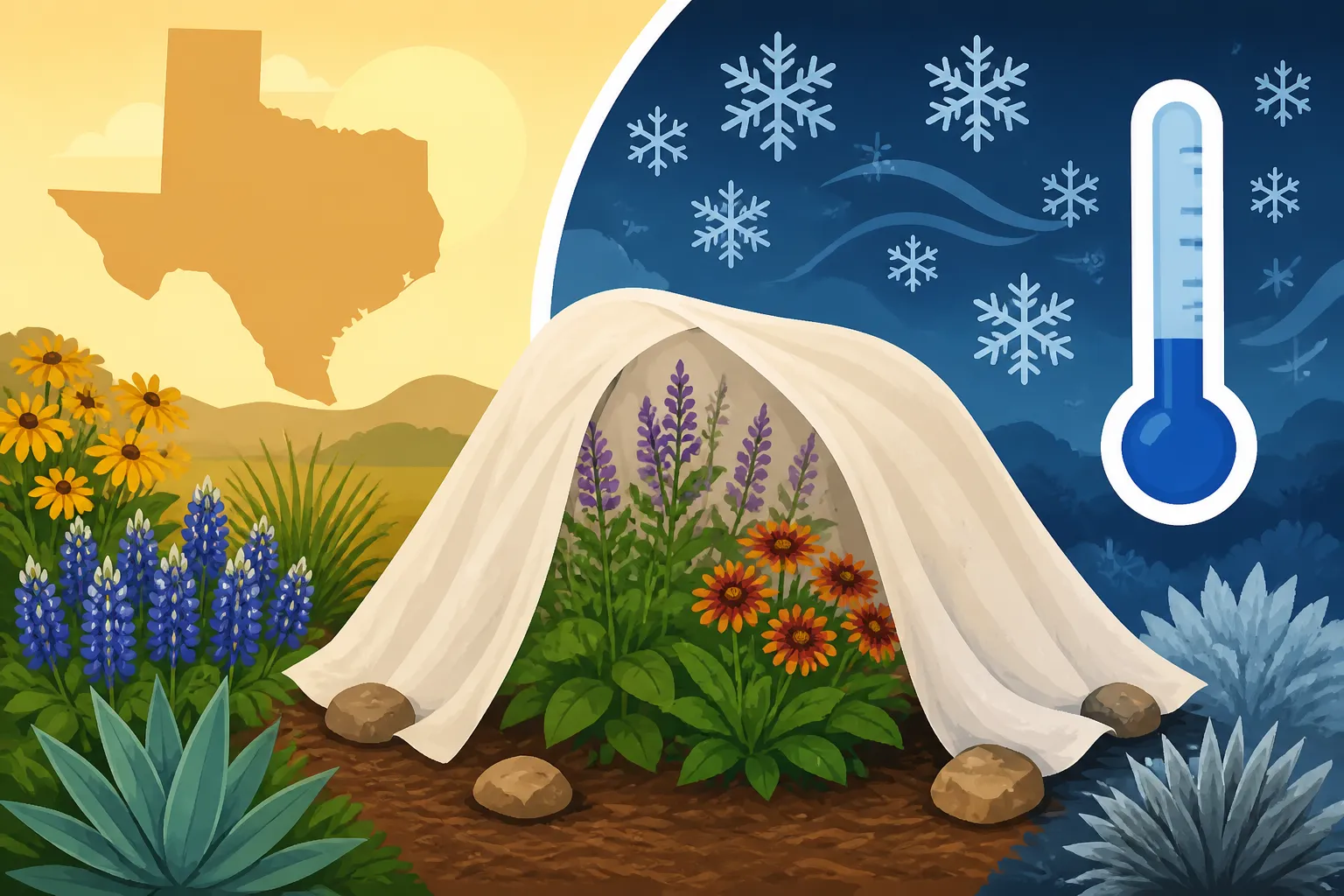
- Drape the cover over the plant. Keep fabric loose enough to avoid crushing stems. If the plant is tall or fragile, support the cover rather than letting its weight rest on the foliage.
- Bring the edges down to the ground. The cover should extend beyond the plant’s foliage and reach the soil around it. Ground warmth is part of the protection; a cover that stops midway up the stems leaves an opening for cold air.
- Secure the edges. Use a method that holds the material in place without damaging the plant. Check corners and exposed edges, which can lift first in wind.
- Avoid sealing moisture in. Do not leave a damp, airtight covering pressed against foliage. If using a structure with plastic, keep it off the plant and plan to monitor or ventilate it when daytime conditions warm.
- Check the setup after the cold period. Remove or open the cover when conditions allow, and inspect for broken stems, moisture buildup, or material that has shifted.
Set covers before sundown when possible, so they can trap warmth already stored in the soil. This timing is covered in Setting Frost Blankets Before Sundown to Trap Radiated Heat. Avoid rushing through installation in strong wind; an unsecured cover can expose plants, damage stems, or become a hazard.
Do not rely on a cover to solve every problem
If the plant is in a container, moving it to a sheltered position may be more effective than covering only the top. The roots in a pot are exposed around the sides and bottom, so consider the whole container. Grouping pots in a protected area can reduce exposure, but do not place them where drainage is blocked or where they may be knocked over.
If a plant is large, sprawling, or intertwined with neighboring plants, a cover may be difficult to install safely. In that case, focus protection on the most vulnerable plants or parts of the bed. Avoid bending stiff branches into a cover or weighing a fragile plant down with heavy material.
Avoid over-watering or fertilizing as a last-minute fix
Do not assume that extra water or fertilizer will prevent freeze damage. Soil moisture conditions, drainage, and plant needs vary. If the bed is dry, water according to the plant’s normal requirements and local conditions rather than flooding it just before cold weather. Do not use fertilizer to stimulate tender new growth ahead of a freeze. Follow product labels for any fertilizer used, and seek plant-specific local advice if the right course is unclear.
Remove Covers and Assess Damage Carefully
A cover is temporary. Leaving it in place through bright, mild daytime conditions can trap heat and moisture, stress foliage, or encourage unwanted growth. Check the forecast and open or remove the covering when the immediate cold risk has passed and daytime conditions are suitable.
Do not pull a cover off abruptly if it is frozen to a plant or weighed down by ice. Wait for conditions to soften, then lift it carefully to avoid snapping stems. After removal, look for broken branches, crushed growth, and moisture that has accumulated under the material. If another freeze is forecast, reinstall the cover as needed rather than leaving a poorly ventilated setup in place continuously.
Do not judge survival by the first brown leaves
Cold-damaged foliage may look limp, dark, or scorched. Some stems may collapse, while the crown or roots remain viable. The reverse can also happen: a plant may look acceptable for a short time but show injury later. Avoid removing large amounts of growth immediately just to tidy the bed.
Wait for clearer signs of recovery or continued decline before pruning. If you can identify a damaged stem without cutting into healthy tissue, remove it only when appropriate for the plant. For a practical approach to delayed pruning decisions, use Should You Wait Until Spring to Prune Freeze-Damaged Plants?.
Keep the bed insulated without smothering the crown
A light layer of organic material can help moderate soil conditions, but the amount and placement should suit the plant and bed. Keep mulch from being packed tightly against crowns or woody stems. A thick, wet layer can hold excess moisture and create a different problem. Fallen leaves can be useful where they stay in place and do not smother the plant; Mulching Perennials with Fallen Leaves for Cold Insulation discusses that approach.
Do not assume all debris is beneficial. Remove material that is diseased, matted, or likely to keep the crown soggy. If the plant has specific care needs, follow a reliable plant-specific recommendation rather than using a blanket rule for every perennial.
Make Winter Protection Part of a Better Planting Plan
Covers are most useful as a short-term tool, not as a substitute for matching plants to a site. If the same perennial needs extensive protection every winter, consider whether it is suited to that location, whether it is getting established properly, or whether a nearby windbreak or different bed position would help.
Improve protection before the next freeze
Use observations from each cold spell. Note which plants were covered, which were left alone, where the cover shifted, and where frost or damage appeared. These simple records can make future decisions more selective. A cover that worked well for one plant in one bed may not be useful for a different plant in a windy or low-lying spot.
When planting new perennials, consider drainage, exposure, shade, and the plant’s regional fit. Good siting can reduce stress long before winter arrives. A perennial that has had time to root and grow under suitable conditions is generally a better candidate for surviving ordinary seasonal variation than one planted recently in an unsuitable spot.
Plan around seasons, not a single calendar date
Texas weather varies by region and from year to year. Average freeze information can help with planning, but it cannot identify the exact night a particular yard will freeze. Nor does a hardiness zone tell you when to cover plants. Use forecasts, local observations, and the individual plant’s needs together.
For broader seasonal planning, Month-by-Month Texas Gardening Calendar: Planning for Heat and Cold and Freeze Risk and Growing Season Length Across Texas Regions provide context for how cold risk fits into a Texas gardening year. Use them alongside current local forecasts rather than treating any calendar date as a fixed deadline.
The most practical approach is to protect selectively. Leave hardy, established perennials to follow their natural winter cycle; cover vulnerable plants when the forecast and site justify it; and remove the cover when conditions permit. That approach avoids needless work while giving higher-risk plants a reasonable layer of protection.
Frequently Asked Questions
Should established Texas native perennials be covered before every freeze?
No. Many healthy, established native perennials tolerate normal seasonal cold or die back and regrow. Consider covering plants that are newly planted, stressed, exposed, in containers, or known to be vulnerable to the forecast conditions.
Is frost cloth better than a plastic sheet?
Breathable frost-protection fabric is generally easier to use directly around plants. Plastic can trap heat but should not touch leaves or stems, and a plastic-covered structure needs monitoring for heat and moisture. No cover guarantees protection during prolonged or severe cold.
Should I cut back perennials before covering them?
Not automatically. Cutting back too soon can remove growth that might survive or make it harder to judge the plant after the cold. Leave healthy growth in place unless plant-specific guidance or a genuine cleanup need calls for removal.
When should a cover come off?
Remove or open it when the immediate cold risk has passed and daytime conditions are suitable. Check for trapped moisture, overheating, or material resting on the plant, and put the cover back if another freeze is forecast.
Disclaimer
This article is for general informational purposes only and does not constitute professional advice. Laws, prices and regulations vary by location and change over time. Consult a qualified professional for guidance on your specific situation. Texas Gardening Hub is not a government agency and is not affiliated with any university extension, state department of agriculture or other government agency.