Why Yard Microclimates May Defy Your Texas USDA Zone
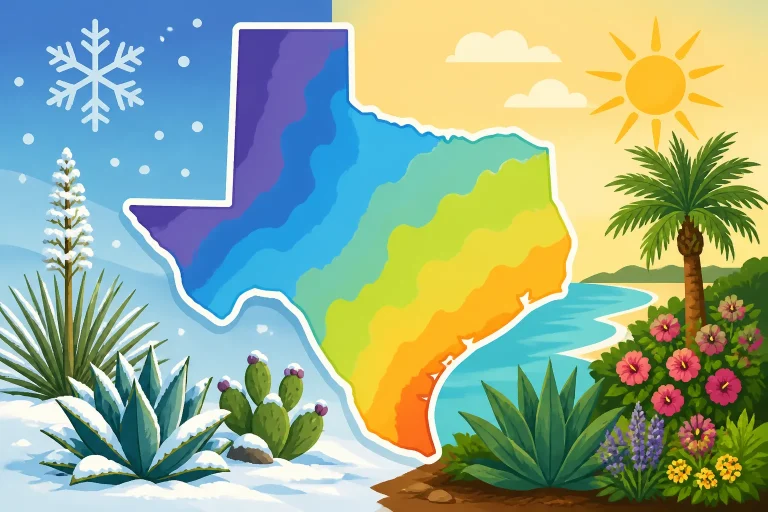
A USDA hardiness zone can help you choose plants, but it cannot tell you exactly when your Texas yard will freeze, thaw, dry out, or heat up. A sheltered bed and an exposed corner may behave like different gardens, even at the same address. Understanding those microclimates helps you adjust planting plans to the conditions your plants actually face.
What a USDA hardiness zone can—and cannot—tell you
The USDA Plant Hardiness Zone Map groups locations by their average annual extreme minimum winter temperature. It is a useful starting point for judging whether a perennial, shrub, or tree is likely to survive typical winter cold in a broad area. It is not a planting calendar, a forecast, or a guarantee that a particular plant will thrive in a particular yard.
A zone does not show how soon your soil warms in spring, how often your garden gets late frosts, or how long summer heat lasts. It also cannot account for differences in sun, wind, drainage, shade, and nearby surfaces within a property. Two beds that fall in the same mapped zone can put plants through noticeably different conditions.
That distinction matters throughout Texas, where gardening conditions vary widely and weather can change quickly. A winter low that challenges a tender plant in one year may not occur the next. A plant’s survival also depends on its health, maturity, soil conditions, and exposure—not just the zone assigned to the area. For help looking up the mapped zone for an area, see USDA Plant Hardiness Zones in Texas: Looking Up Your Zone by ZIP Code.
For planting dates, a zone is especially incomplete. It does not tell you when it is safe to sow warm-season seeds or set out seedlings. Nor does it predict when heat will become stressful for cool-season crops. Those decisions depend on seasonal weather patterns and local frost risk as well as the needs of each crop. Does a Hardiness Zone Set Your Planting Calendar? explains why the two tools answer different questions.
| A hardiness zone can help with | A hardiness zone cannot tell you |
|---|---|
| Whether a perennial or woody plant is broadly suited to winter lows in an area | The last spring frost date in your yard |
| Comparing the cold tolerance of plants | Whether a sheltered bed will stay warmer than an exposed one |
| Narrowing down plant choices before checking local growing conditions | How quickly a sunny bed dries or heats |
| Setting expectations for typical winter survival | How long a vegetable crop has before summer heat affects it |
Treat the zone as one filter, not the final decision. For a planting calendar, combine it with information about regional growing windows, crop maturity, and likely freeze risk. Then adjust your expectations based on the conditions you observe in your own yard.
How yard microclimates change plant conditions
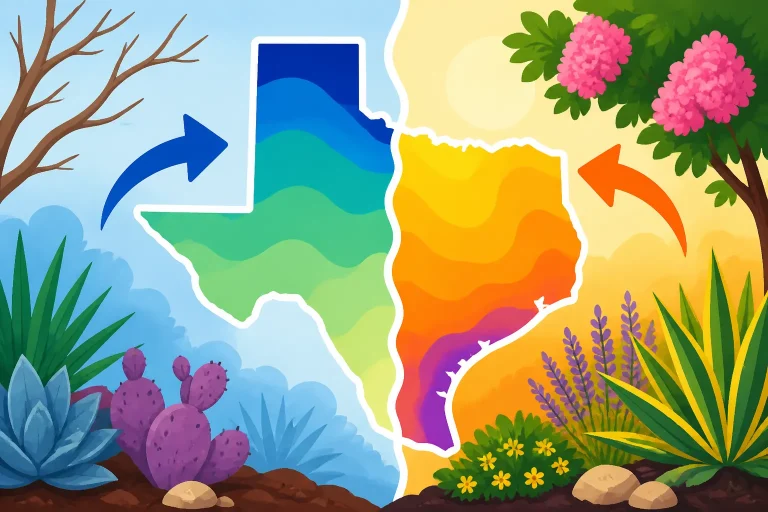
A microclimate is a small area whose conditions differ from those around it. It may be a warm strip beside a south-facing wall, a low spot that collects cold air, or a windy bed near an open fence line. The differences can be subtle on an ordinary day and important during a cold snap, heat wave, or dry spell.
Sun and shade
Sun exposure affects how much warmth and light a bed receives, how quickly its soil dries, and how hot nearby surfaces become. A sunny bed may warm earlier than one shaded by a building or large tree. That can help some plants establish, but it can also mean the sunny bed dries faster and becomes harder on tender crops as hot weather arrives.
Shade changes through the day and across seasons. A wall, roof, fence, or deciduous tree can cast a different pattern as the sun moves. A spot that gets strong spring sun may receive much less light later, or the reverse may happen after leaves drop. Before choosing a location for vegetables or flowers, observe the light at different times rather than relying on a single glance. Mapping Daily Sunlight Across Your Yard Before Garden Planting offers a practical way to assess exposure.
Buildings, paving, and reflected heat
Walls and paved areas can absorb warmth and release it later. A bed beside a building may be more protected from wind and radiated heat loss on a cold night than an open bed. In hot weather, the same wall or paving can reflect heat and make nearby plants more vulnerable to drying and scorching.
The effect depends on the site. A shaded wall may create a relatively sheltered growing area, while a sunny wall beside a narrow paved strip may become very hot. Watch how the bed behaves during both cool and warm conditions. A location that is useful for protecting a plant in winter may need more attention to watering or shade in summer.
Roof overhangs and tree canopies also change how much rain reaches the soil. Plants under cover may receive less rainfall than you expect, even when surrounding beds look wet. If a bed stays dry after rain, check whether a roof, canopy, or other structure is diverting water away from it.
Wind and exposure
Wind can dry soil and foliage, bend or damage young growth, and make an exposed site feel colder to plants during a cold spell. A sheltered courtyard or bed near a solid structure may experience less wind than an open corner of the yard. A windbreak can reduce exposure, although it may also cast shade or affect airflow.
Pay attention to prevailing conditions in your own yard rather than assuming that a fence blocks all wind. Gaps, corners, and passages between buildings can funnel air. Young seedlings and newly planted perennials are often more vulnerable to exposure than established plants, so the same bed can be manageable for a mature shrub but difficult for a new transplant.
Elevation, slope, and cold-air movement
Cold air can move downhill and collect in low areas, especially on calm, clear nights. A low corner may therefore be more exposed to frost than a slightly higher bed nearby. A wall, dense hedge, or other barrier can affect how air moves through the yard, so the coldest spot is not always the most obvious one.
Drainage matters too. Water may collect in low ground or compacted soil, leaving roots in conditions that differ from those in a raised or sloped bed. A low area can be both colder during certain nights and wetter after rain. These conditions affect plant selection and care, but they are separate from the broad winter-temperature averages represented by a hardiness zone.
| Yard feature | Possible microclimate effect | What to observe |
|---|---|---|
| Sunny wall or paved patio | More reflected warmth; faster drying in hot weather | Heat, leaf stress, and soil moisture on warm days |
| Roof overhang or dense canopy | Less direct rain and sunlight | Whether soil remains dry after nearby beds are wet |
| Open, windy corner | Faster drying and greater exposure | Seedling condition and soil moisture after windy spells |
| Low point in the yard | Cold-air pooling or slow drainage | Frost damage and standing water compared with higher spots |
| Sheltered area near a structure | Less wind and potentially reduced cold exposure | Whether it also receives enough light and rain |
| Large tree shade | Reduced direct sun and competition for water | Light through the season and moisture near the root zone |
These are possibilities, not guarantees. A yard feature can help in one season and create a problem in another. The useful question is not whether a site is “good” or “bad,” but which plants and planting windows fit its actual conditions.
How to identify microclimates in your Texas yard
You do not need specialized equipment to begin. A simple record of light, moisture, wind, and temperature-related effects can reveal patterns that are easy to miss when you rely on memory. The goal is not to predict every weather event. It is to understand which areas tend to behave differently so you can make better choices.
Compare several locations
Choose a few representative spots: an open bed, a sheltered bed, a low area, and a place near a wall or paving. Note what surrounds each one, when it receives sun, whether wind passes through it, and whether rainfall reaches it directly. If you garden in containers, include the patio or balcony locations where pots sit; containers can experience more abrupt changes in heat and moisture than in-ground beds.
Avoid assuming that one observation describes a whole season. A tree’s shade changes as its leaves grow, and the angle of sunlight changes over the year. Take notes more than once, especially when you are deciding whether a bed is suitable for a crop that needs a particular amount of light.
Track temperature and frost effects
A thermometer can help you compare spots, provided you use it consistently and place it in a way that gives comparable readings. Avoid comparing a shaded reading in one location with a thermometer sitting in direct sun in another. The aim is to notice relative patterns—such as one bed staying colder or warming earlier—not to treat a single reading as a reliable forecast.
Plants can also act as indicators. If frost injury appears repeatedly on exposed plants but not on nearby plants of similar type, that difference is useful evidence. So is a pattern of earlier leaf growth in a sheltered spot. Keep in mind that plant responses can also result from watering, soil, pests, or plant health, so look for repeated patterns before drawing conclusions.
Weather-station freeze information can help with broader planning, but a station does not necessarily represent a particular backyard. Nearby buildings, elevation, and exposure may change local conditions. See Do Airport Weather Station Freeze Dates Match Your Yard? for more on interpreting station information alongside yard observations.
Watch soil moisture after rain and irrigation
Different areas may dry at different rates even when they receive the same rainfall. A roof edge may leave a dry strip, while a low bed stays damp. Dense shade can reduce evaporation, but tree roots may also draw water from the same soil. Check the soil where roots are growing rather than judging moisture by the surface alone.
Use a consistent method when comparing beds. Check the same depth in each location and note whether the soil feels dry, moist, or unusually wet. If a bed repeatedly stays saturated or dries rapidly, factor that into crop and plant selection. Microclimate observations do not replace good drainage or watering practices, but they help explain why a single watering routine may not work across the whole yard.
Keep a short site log
A useful record can be simple:
- Sketch the yard and mark the beds, structures, trees, paved areas, and low spots.
- Note when each growing area receives direct sun, and whether that changes over the season.
- Record which spots dry first after rain or watering.
- Mark where wind seems strongest and where plants are most sheltered.
- Note any repeated frost injury, early growth, heat stress, or standing water.
- Compare those observations with the plants you grow and the dates you sow or transplant.
A few notes from different parts of the year are more useful than a detailed record kept for only one unusual week. If one season is unusually warm, cold, wet, or dry, treat its results as one piece of evidence rather than a permanent rule.
Adjust your planting calendar to the bed, not just the map
A planting calendar is a starting point for timing crops; it is not a promise that every part of the yard is ready at once. A sheltered bed may be suitable earlier than an exposed one, while a sunny location may become too hot sooner. Use local planting guidance for the crop and region, then make small adjustments based on repeated observations.
Separate cold risk from crop timing
A hardiness zone is most useful for broad plant survival decisions, especially for perennials and woody plants. For vegetables and annual flowers, planting timing also depends on the crop’s tolerance of cold, the soil conditions it needs, and the time it takes to mature. A cool-season crop and a warm-season crop may need very different conditions, even when they share a bed.
For spring planning, avoid treating an early spell of mild weather as proof that a tender crop is safe from a later cold event. Conversely, do not assume that every bed faces identical risk. A sheltered location may reduce exposure, but it does not make a tender plant immune to freezing temperatures. Spring and Fall Freeze Probability Milestones for Texas Gardeners can help put seasonal freeze risk into context.
For fall planting, consider both the crop’s time to maturity and the chance of cold weather before harvest. A warm, sheltered bed may support growth longer than an exposed bed, but it cannot guarantee that a late crop will finish on schedule. Use crop-specific guidance and allow for the fact that growth can slow as conditions change.
Choose plants for the conditions you have
If a bed is hot, exposed, and quick to dry, choose plants suited to those conditions or plan how you will manage the exposure. A site that gets reliable morning light but afternoon shade may suit a different set of crops than a bed with intense sun all day. If the yard includes both types of location, use that variation to your advantage rather than trying to make every bed perform the same way.
A sheltered warm spot can be useful for plants that need protection from wind or cold, but it may become a heat trap. A low, damp area may be a poor fit for plants that need well-drained soil, even if the mapped zone seems appropriate. For a broader approach to planning around regional growing windows, see Texas Spring and Fall Planting Windows by Region.
Use protection as a supplement, not a substitute
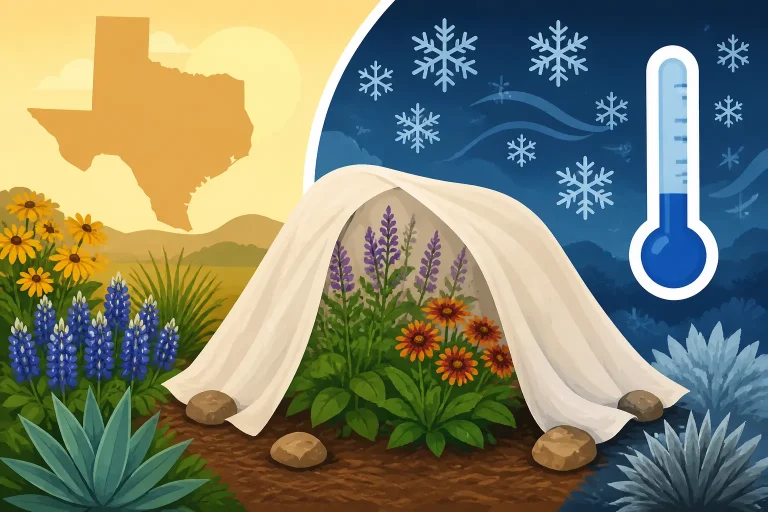
Covers, containers, and temporary relocation can help manage short-term exposure, but they do not erase the underlying conditions of a site. A cover may offer some protection during a cold event; it cannot guarantee a plant will remain undamaged. In hot weather, shade may reduce stress, but plants still need appropriate water and suitable growing conditions. Follow product labels for any materials or products that have instructions for use.
If cold protection is part of your plan, identify the plants that are most vulnerable before a freeze is forecast. Frost and Freeze Protection Strategies for Texas Landscapes covers ways to think about protection across a yard. For potted plants, their roots may be more exposed to temperature changes than roots in the ground, so a sheltered spot can matter. Protecting Potted Plants from Texas Freezes: When to Move or Cover focuses on that situation.
Reassess after major changes
A microclimate can change when a tree grows, a fence is replaced, a patio is added, or a nearby structure changes shade and wind patterns. A mature tree may provide valuable afternoon shade but also compete for water. A newly built wall may create shelter while reflecting heat into a bed. Recheck your notes whenever the yard changes or your plants begin behaving differently.
The most dependable approach is to combine three kinds of information: the mapped hardiness zone, regional planting guidance, and observations from your own growing spaces. The zone helps narrow plant choices. A calendar helps frame seasonal timing. Your yard record helps you decide which bed is ready, which one needs protection, and where a different crop may be a better fit.
Frequently Asked Questions
Can one yard have more than one microclimate?
Yes. Differences in sun, shade, wind, elevation, soil moisture, and nearby structures can create distinct conditions within the same yard. A sheltered bed and an exposed bed may not experience the same frost risk or summer drying.
Does a warmer microclimate mean I can plant earlier?
Not automatically. A sheltered area may warm earlier, but it can still experience a freeze. Use crop-specific planting guidance and local freeze information, then consider your own observations rather than relying on one mild spell.
Should I choose plants based only on my USDA hardiness zone?
No. The zone is useful for broad winter-survival comparisons, but it does not account for every site condition. Check a plant’s light, moisture, drainage, and heat needs as well as its cold tolerance.
How long should I track my yard before adjusting planting plans?
Look for repeated patterns rather than making a decision from one unusual day or season. Notes from different weather conditions and seasons can show which areas consistently stay warmer, colder, wetter, drier, sunnier, or more exposed.
Disclaimer
This article is for general informational purposes only and does not constitute professional advice. Laws, prices and regulations vary by location and change over time. Consult a qualified professional for guidance on your specific situation. Texas Gardening Hub is not a government agency and is not affiliated with any university extension, state department of agriculture or other government agency.